


These changes will affect everyone working in the waste management sector as early as March next year.

The keynote speaker was Diana Obukhova, an expert at the Legal Center for Industrial Ecology, who provided a detailed breakdown of the upcoming changes and their implications for the industry.
Together with colleagues—hazardous waste processors—we sought to understand the changes to land legislation that will take effect as early as March of next year.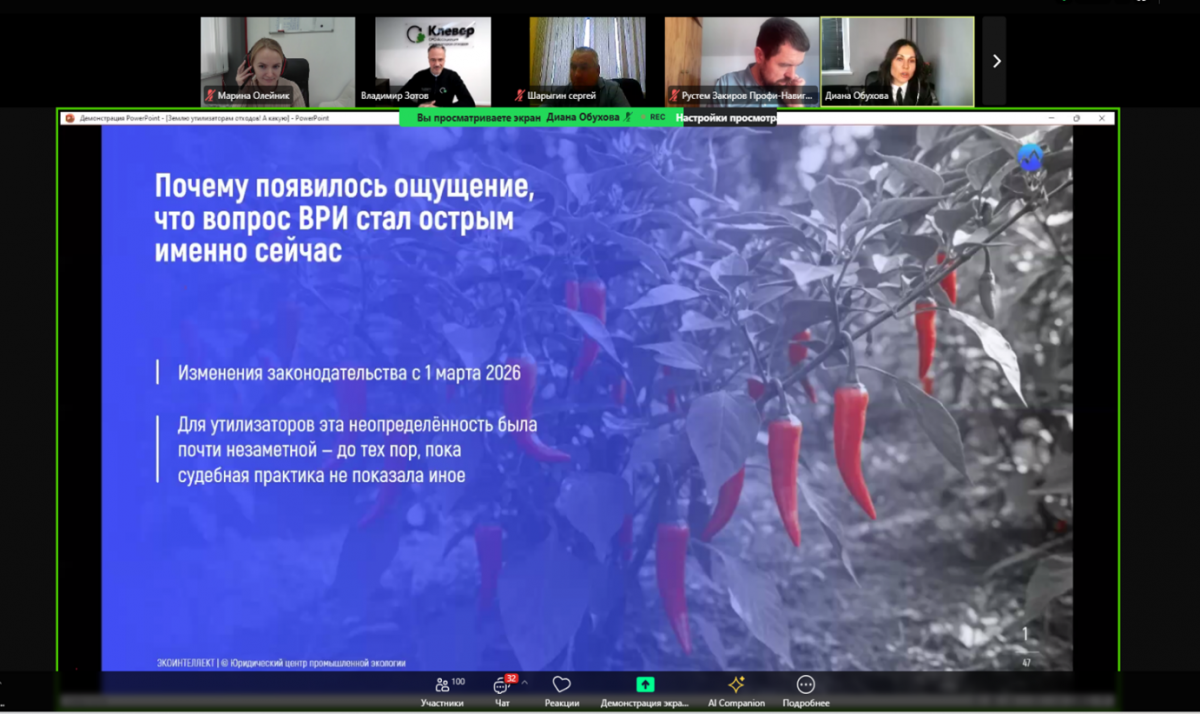
“Entering accurate information into the Unified State Register of Real Estate (EGRN) on the type of permitted use of land plots occupied by utilization facilities is not just a formality. It can become an important part of the waste management reform, which will increase the transparency and legitimacy of the entire sector,”
— emphasized Marina Oleynik.
Why is this important for waste treatment operators?
-
A large share of land plots for utilization and waste disposal facilities have a permitted use designation that does not match the VRI (type of permitted use) Classifier;
-
Inaction risks not only fines, but also forced restoration of the plot at your own expense.
-
All infrastructure investments may be lost if the VRI is not brought into compliance.
-
All permitting documentation is tied to the plot. Changing it is akin to starting operations from scratch.
And why does this concern equipment manufacturers?
“Today, a responsible manufacturer is one who works with the customer not only within the scope of supply, but also supports the operator along the entire path: from organizing commissioning and obtaining a license to assisting during inspections to ensure uninterrupted operation,” notes Marina Oleynik.“Today, a responsible manufacturer is not just a supplier, but a partner who supports the operator at every stage: from commissioning and licensing to assistance during inspections,”
— noted Marina Oleynik.
Assessing the operating conditions of equipment in terms of environmental and industrial safety is becoming an integral part of work amid import substitution and the industry’s new challenges.
What to expect from the changes?
During the webinar, the speaker not only focused on the upcoming legislative amendments, but also on the underlying reasons for the legislative initiative; the audience was presented with a ready and systematic analysis of existing case law on the topic and possible options for bringing their operations into compliance with current requirements.
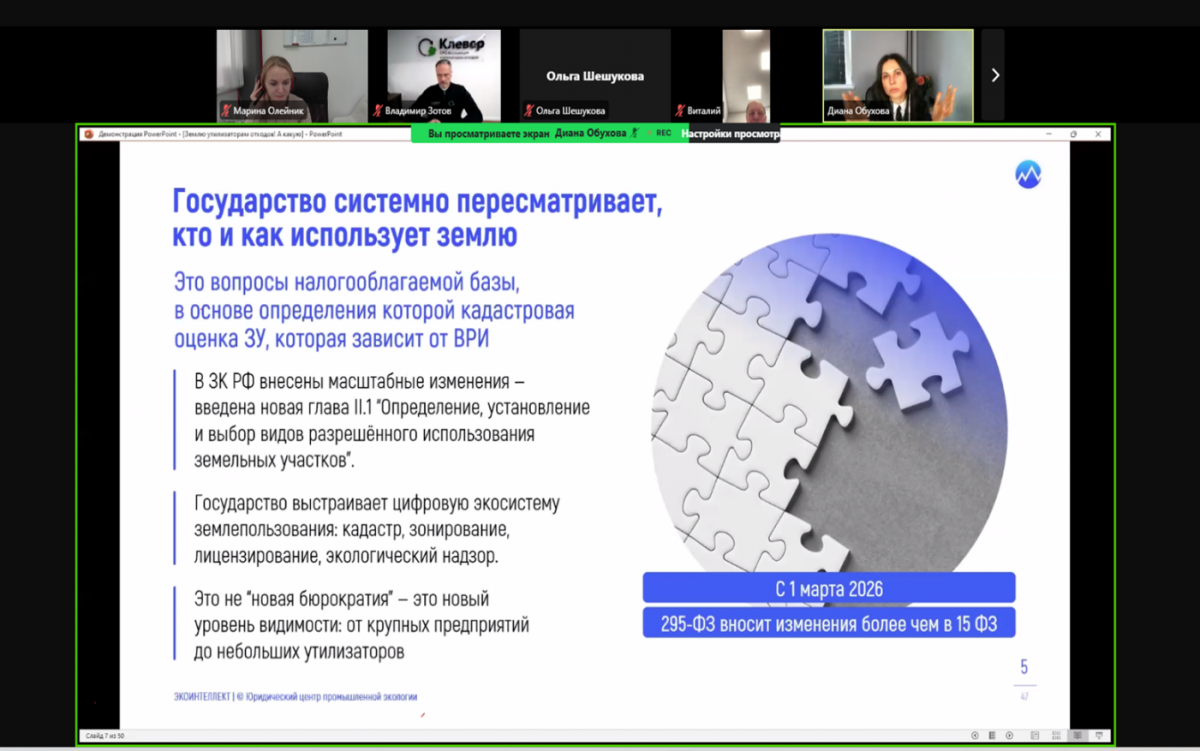
Conclusions
Companies should already assess whether the land plots they use comply with the current VRI and begin the procedure to bring them into compliance. Delays may lead to significant financial and operational losses.
“We thank the ‘Clover’ association, the Legal Center for Industrial Ecology, and Vladimir Zotov personally for consolidating the industry, as well as Diana Obukhova for practical assistance in solving complex issues. Only together can we build a transparent and effective waste management system in Russia,”
— summarized Marina Oleynik.


