


Waste disposal:
The issue of industrial and hazardous waste disposal is more pressing today than ever. Company executives face stricter environmental regulations, rising landfilling costs, and increased attention to environmental issues from the public and regulatory authorities.
Among the many thermal treatment technologies, pyrolysis and incineration are often discussed. Both methods allow waste to be destroyed rather than simply stored in landfills. However, there are key differences between them that directly affect their effectiveness, cost-efficiency, and applicability in real-world conditions. Let’s conduct an objective analysis.
Pyrolysis: Theory vs Practice
Operating principle: Pyrolysis is the process of thermal decomposition of organic matter in the absence of oxygen. Under ideal conditions, it can produce useful products: pyrolysis gas, oil, and a carbon residue.
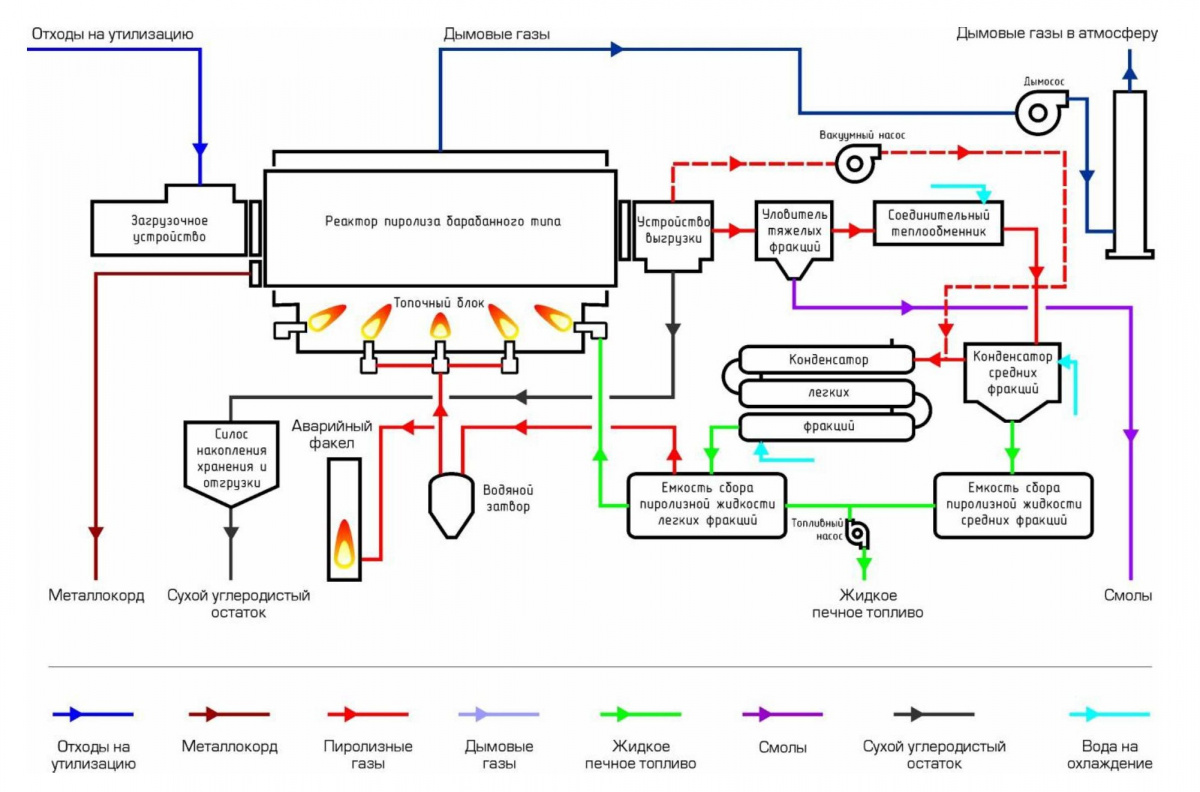
One of the main challenges of pyrolysis is the difficulty of scaling the process. In laboratory settings, pyrolysis can demonstrate high efficiency, but when moving to an industrial scale, significant difficulties arise. This is due to the need to maintain stable temperature regimes and control feedstock quality. The slightest deviations in these parameters can lead to a reduction in the quality of the final products and an increase in operating costs.
-
The need for high-tech equipment to maintain stable temperatures.
-
Requirements for continuous monitoring and process control.
-
Difficulties in ensuring uniform heat distribution in large volumes of feedstock.
Technical aspects of scaling
Scaling pyrolysis requires significant investment in equipment and infrastructure. It must be taken into account that stable operation requires a complex system for controlling temperature and pressure. This includes the use of high-temperature furnaces, cooling and filtration systems, as well as automated process control systems.
Small temperature changes can significantly affect the quality of the resulting products, which requires constant process monitoring and adjustment.
|
Parameter |
Laboratory conditions |
Industrial conditions |
|
Temperature |
400-600 °C |
Requires precise control |
|
Feedstock quality |
High |
Varies |
|
Energy consumption |
Low |
High |
Economic aspects
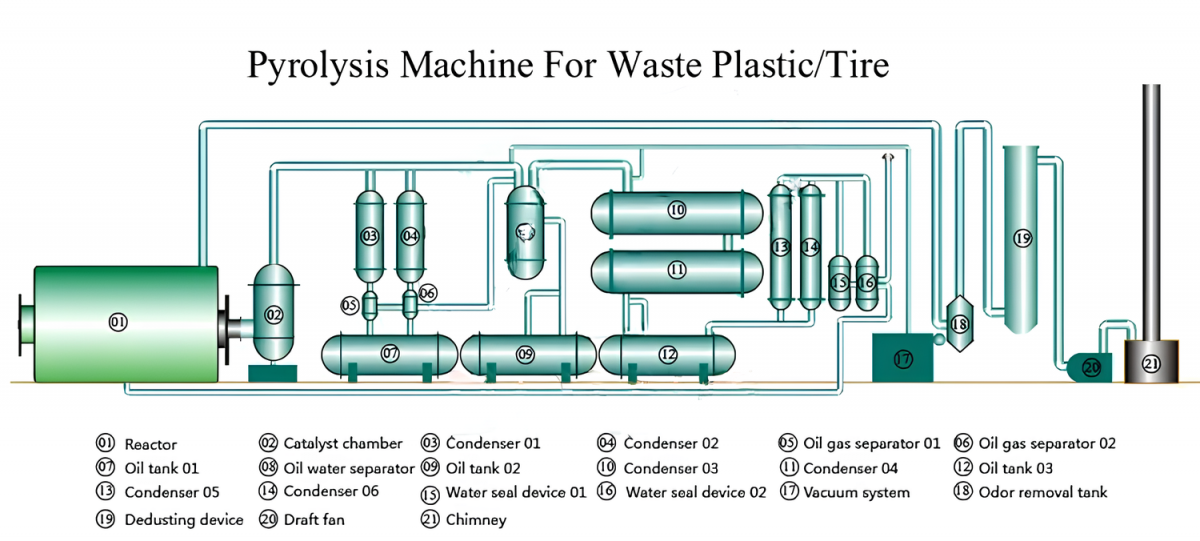
The economic efficiency of pyrolysis at an industrial level also raises questions. High capital and operating costs, as well as the need for qualified personnel, make this process expensive. In addition, price instability for end products such as pyrolysis oil and gas can negatively affect project profitability.
High requirements for feedstock and technology
Successful pyrolysis requires strict adherence to feedstock quality requirements. This includes low moisture content, minimal mineral content, and a high content of organic compounds. Failure to meet these requirements can result in low-quality products that find no application.
-
Sorting and preparing the feedstock before pyrolysis.
-
The need for pre-drying of waste.
-
Control of mineral impurities.
Preparing feedstock for pyrolysis is a complex and labor-intensive process. It includes sorting waste to remove ballast fractions such as glass and metals, as well as drying to reduce moisture. These steps require additional costs and time, which can slow down the processing and increase its cost.
Quality of end products
The quality of pyrolysis products, such as pyrolysis oil and gas, directly depends on the composition and quality of the initial feedstock. If feedstock requirements are not met, product quality can be so low that it finds no further application. This limits the use of pyrolysis for processing a wide range of waste.
|
Indicator |
High quality |
Low quality |
|
Sulfur content |
Low |
High |
|
Calorific value |
High |
Low |
|
Application |
Wide |
Limited |
High cost of implementation and operational control
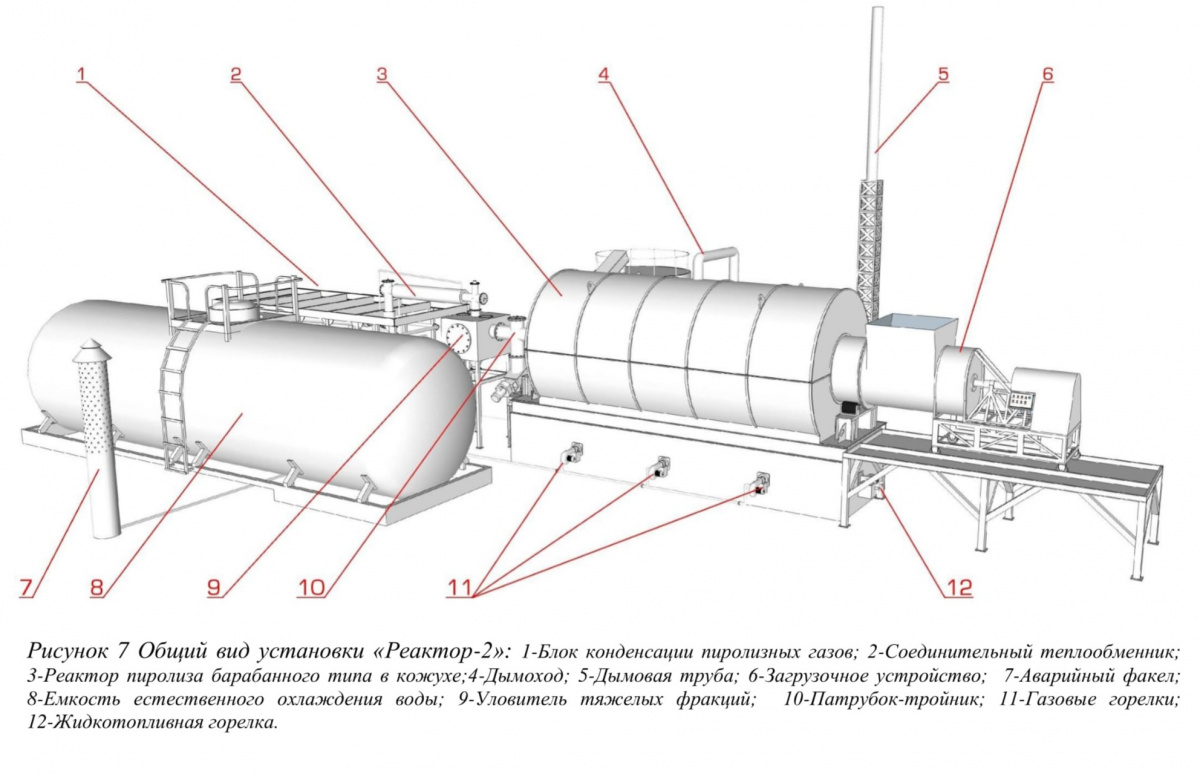
Implementing pyrolysis requires significant financial investment. The high cost of equipment, the need for a large number of qualified personnel, and ongoing operating expenses make this process expensive. For successful implementation, it is necessary to invest in high-tech equipment that ensures process stability and the quality of end products. This includes furnaces, cooling and filtration systems, as well as automated control systems. In addition, price instability for end products can negatively affect project profitability.
-
High cost of equipment and infrastructure.
-
Need for qualified personnel.
-
Ongoing operating expenses.
Pyrolysis requires a large number of qualified personnel capable of managing complex technological processes and ensuring control and stability of equipment operation. This increases the cost of training and paying specialists.
In practice, these limitations narrow the scope of pyrolysis to niche applications with a known and stable waste composition (for example, clean plastic waste or tires). For most enterprises dealing with mixed, wet, or heterogeneous waste, pyrolysis becomes an economically impractical and technologically risky choice.
Incineration: A universal method
Operating principle:
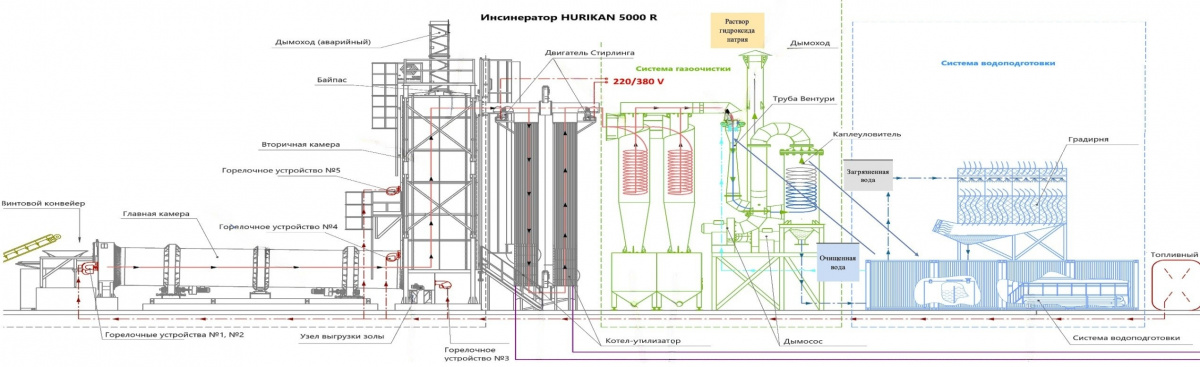
Incineration is becoming increasingly popular due to its ability to significantly reduce the volume of waste and minimize its impact on the environment.
Key advantages proven in practice:
1. Versatility and no feedstock requirements.
This is the main advantage. Incinerators can neutralize almost any type of waste: solid, liquid, paste-like, including hazardous (medical, biological, oil-containing). Moisture, ash content, and composition of the waste are not critical limitations. No costly pre-sorting and drying are required.
2. High environmental safety.Modern incinerators are not just furnaces but complex technological systems that include:
-
Multistage gas cleaning systems: scrubbers, baghouse filters, adsorbers, cyclones.
-
Afterburning chambers, where at temperatures above 1100°C even the most persistent toxic compounds, including dioxins and furans, are reliably destroyed.
-
Emissions from such installations strictly comply with GOST R 58440-2019 and European directives.
3. Economic efficiency and quick payback.
-
Waste volume reduction up to 95%. The initial waste turns into inert ash that takes up minimal space and can be used or landfilled without environmental risks.
-
Energy recovery. The heat released during combustion can be used to generate steam or heat production facilities, significantly reducing operating costs.
-
Reduced costs for transportation and landfilling of waste, as well as eliminating the payment for negative environmental impact (НВОС) upon destruction.
4. Reliability and ease of operation.
Incinerator designs have been refined for decades. They are less sensitive to fluctuations in waste composition, and their maintenance is simpler and more predictable compared to pyrolysis units.
Modern incinerators are equipped with advanced monitoring and control systems that ensure a high degree of process safety and efficiency. They include filtration and afterburning systems that minimize emissions of harmful substances into the atmosphere. This allows compliance with strict environmental standards and reduces environmental impact.
Compliance with environmental standards
Modern incinerators comply with strict environmental regulations, such as EU emission directives. This ensures minimal environmental impact and allows enterprises to meet all necessary requirements. Thanks to this, incineration becomes not only an effective but also an environmentally safe method of waste disposal.
Use of recovered heat
The heat released during incineration can be used to generate electricity or in other production processes. This not only reduces energy costs but also increases overall efficiency. Thus, incineration becomes not only a method of waste disposal but also a source of additional energy.
|
Indicator |
Before implementation |
After implementation |
|
Disposal costs |
High |
Low |
|
Energy consumption |
High |
Low |
|
Efficiency |
Low |
High |
Conclusion: An informed choice for business
Pyrolysis is a complex, niche technology justified only for specific types of homogeneous and pre-treated waste. Its implementation is associated with high risks and capital investments.
Incineration is a universal, proven, and pragmatic solution for the vast majority of enterprises. It offers predictability, compliance with environmental regulations, low operating costs, and quick payback.
Choose a technology that works here and now — choose a modern incinerator.


