MORE THAN 4,700 ITEMS OF WASTE FROM THE FCCO
Disposal of production and consumption waste, biological and medical, as well as oil sludge
Automation of lid opening
The incinerator is equipped with an automatic system for opening the lid and can be equipped with removable and replaceable buckets and other loading elements. The lid opening can be controlled both from the installation and remotely — from the automation panel or control panel. This ensures the convenience and safety of operation, minimizes risks for personnel and simplifies the operational maintenance of equipment.
Automation of the combustion process
The placement of the control panel on the incinerator body or in the container complex provides quick access to the controls and monitoring. The PLC control panel automates data collection from sensors and, when the set temperature is reached, stops the fuel supply, supporting combustion with air from the burner fans. Gorenje In case of emergency situations, the system of emergency alerts and locks is triggered.
Quick-release burners: safety and flexibility of operation
Quick-release burners increase the safety and reliability of incinerators, especially in emergency situations. The ability to quickly remove without tools reduces the risk of damage and extends the service life of the equipment. It also allows you to quickly change the fuel injectors when changing the type of fuel, for example, from diesel to used oil.
Fuel system: fine and coarse fuel cleaning
Fine fuel purification removes impurities, ensures stable combustion, reduces deposits on burners and increases efficiency. Deaeration prevents drying, stabilizes fuel flow and pressure. Galvanized fuel line and fuel tanks according to GOST with a coarse filter ensure safety. Double cleaning and deaeration reduce fuel consumption, increase efficiency and extend the life of the fuel system.
Cable channel: safety and aesthetics in one solution
The cable duct protects electrical and fuel cells from atmospheric influences, prevents corrosion and insulation damage, increasing the service life of the system. Laying cables in channels increases safety, reduces the risk of injury and ensures an aesthetic appearance of the equipment.
Quick-release elements of the incinerator
The quick-release elements of the incinerator, such as sensors and burners, and electrical connectors are designed to ensure ease of operation and maintenance. These components are equipped with special fasteners and connectors that allow the operator to quickly remove them without having to dismantle the entire system.
Mobile incinerator: a flexible solution for all conditions
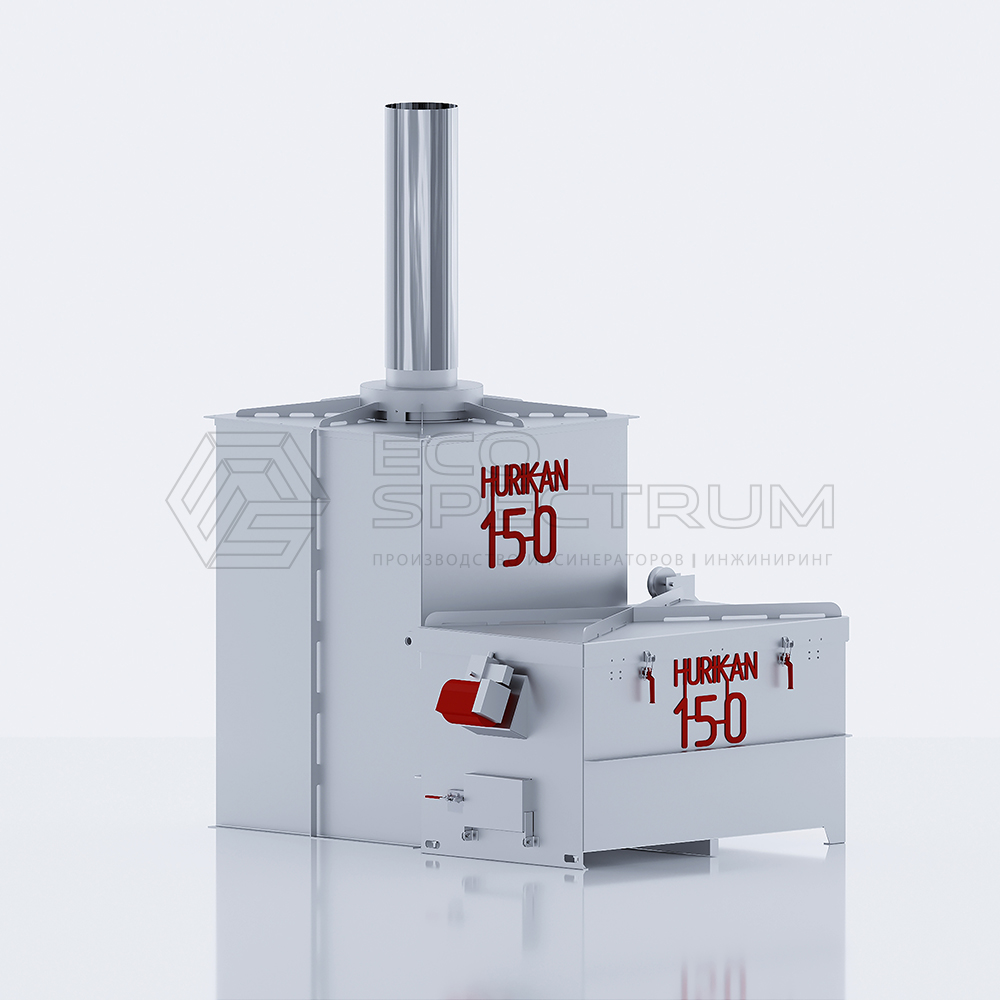
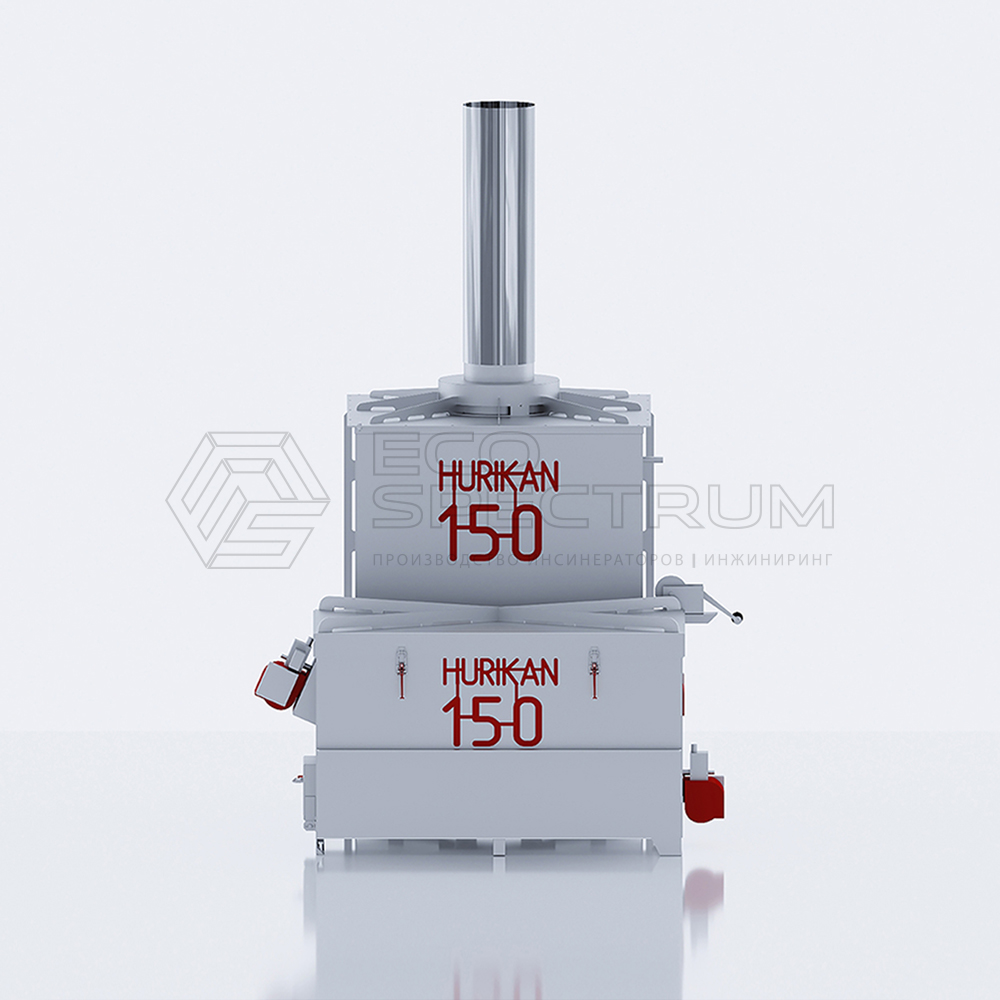
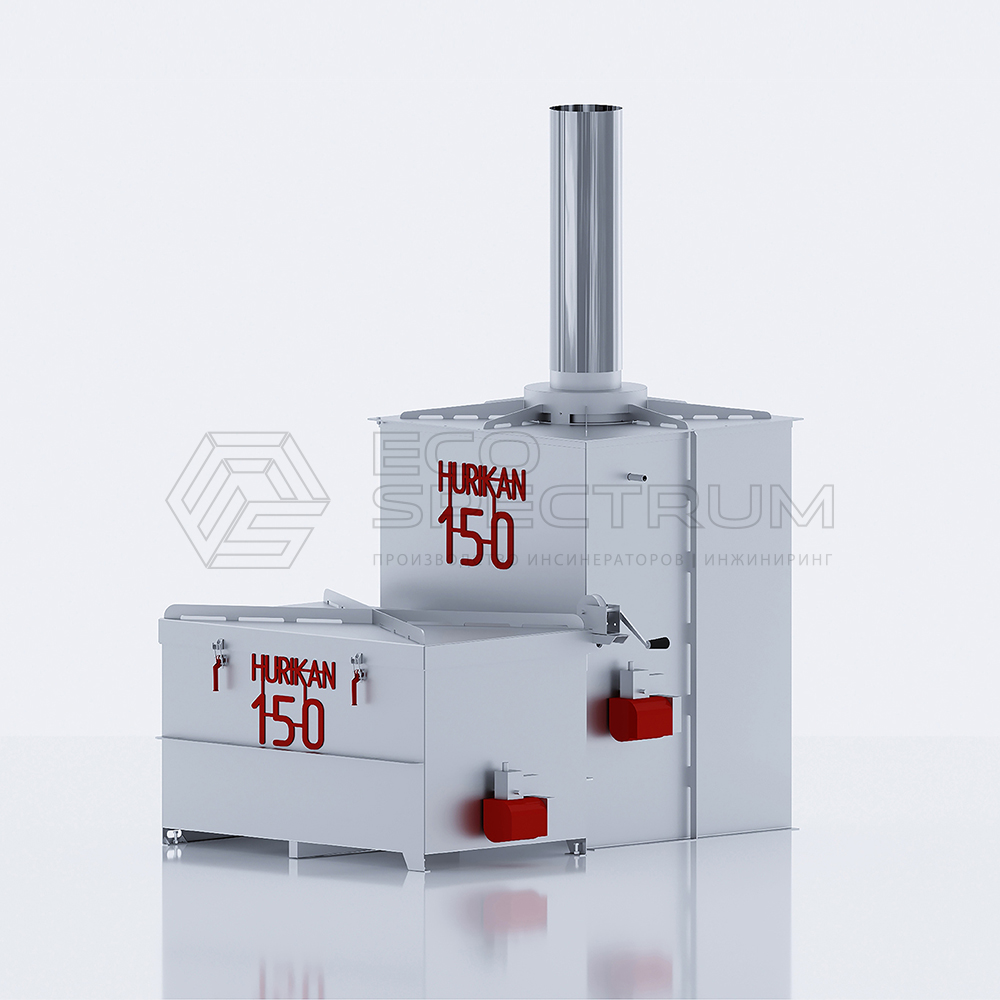
The incinerator can be implemented in a mobile version — on a platform, an automobile chassis or in a container, which provides high transportability and the possibility of use in remote or temporary facilities. The equipment can be equipped with fuel tanks, generators, a fuel heating system, automation, loading buckets and a gas cleaning system, which makes it autonomous and efficient in all conditions.
Concrete lining: mobility and reliability in one solution
Eco-Spectrum produces incinerators exclusively with concrete linings that are resistant to dynamic loads. Unlike brick structures, such structures provide high mobility — incinerators are easily transported on trailers or semi-trailers, travel any distance, are overloaded in ports and are used in remote or mobile environments. The concrete lining is durable and reliable in operation.
Reliable lining of the afterburning chamber
The afterburning chamber is equipped with a fireproof lining with a special coating resistant to aggressive environments. The uniqueness of the design lies in the use of concealed fastening technology, which eliminates the contact of metal elements with high—temperature gases and flames, which ensures durability and reliability in operation.
Efficient ash removal system in the incinerator
The incinerator is equipped with ashtrays and a grate system to ensure convenient and safe ash removal. The ash channels are made with sufficient depth to accumulate ash before unloading. The ash doors are hermetically sealed to the body, have a concrete lining with an insulation layer and a fireproof shock-absorbing cord, which guarantees protection from thermal effects and leaks. For ease of operation, the doors are equipped with ergonomic handles with locks for secure clamping.
Incinerator with heat exchanger: efficient use of thermal energy
The incinerator can be implemented both in a standard design and with an installed heat exchanger, which allows the use of thermal energy released during waste incineration. This heat can be directed to the production needs of the facility — to obtain hot water or to heat the premises. The heat exchanger can be integrated into the afterburning chamber or integrated into the complete set of the gas purification system, providing flexibility and energy efficiency of the entire installation.
The burner ports are tilted
Inclined burner ports play a critical role in waste incineration, providing a directed flame, uniform and efficient combustion, increasing temperature and reducing residues. Such ports are only possible in concrete lining, which Eco-Spectrum specializes in.
Removable buckets for safe and efficient waste loading
Incinerators can be equipped with removable and replaceable buckets, which greatly simplifies operation and increases work safety. This design eliminates direct contact of the operator with the waste, allows you to load the entire volume of waste at one time, minimizing the time when the chamber lid is open. Automation of the bucket loading process facilitates the operator's work, reduces the risk of injury and increases the overall efficiency of the incinerator.
Clear marking for safe and convenient operation
The incinerator is marked with all removable elements, which simplifies self-installation. The designations are made according to GOST for proper transportation and lifting. The pick-up points for loading are indicated, as well as the "hot surface" warning signs, which increases safety and ease of operation.
Ready for transportation: safe and reliable packaging of the incinerator
The incinerator is packed in a shrink wrap marked according to GOST for safe lifting and moving. The devices supplied in the container are additionally packed in containers conforming to the standards. The container is marked according to GOST for transportation by sea and land, the attachment points, centers of gravity and other important parameters are indicated to ensure safety and convenience during transportation.
Afterburning chamber: environmental friendliness and durability
The afterburning chamber has a larger volume than the combustion chamber, which ensures complete waste incineration and compliance with environmental regulations. The lining is made of refractory fiber with stainless steel fasteners using concealed fastening technology — this eliminates the contact of fasteners with hot gases and increases the service life. During the manufacture of the chamber from concrete, stiffeners are added to increase the strength.


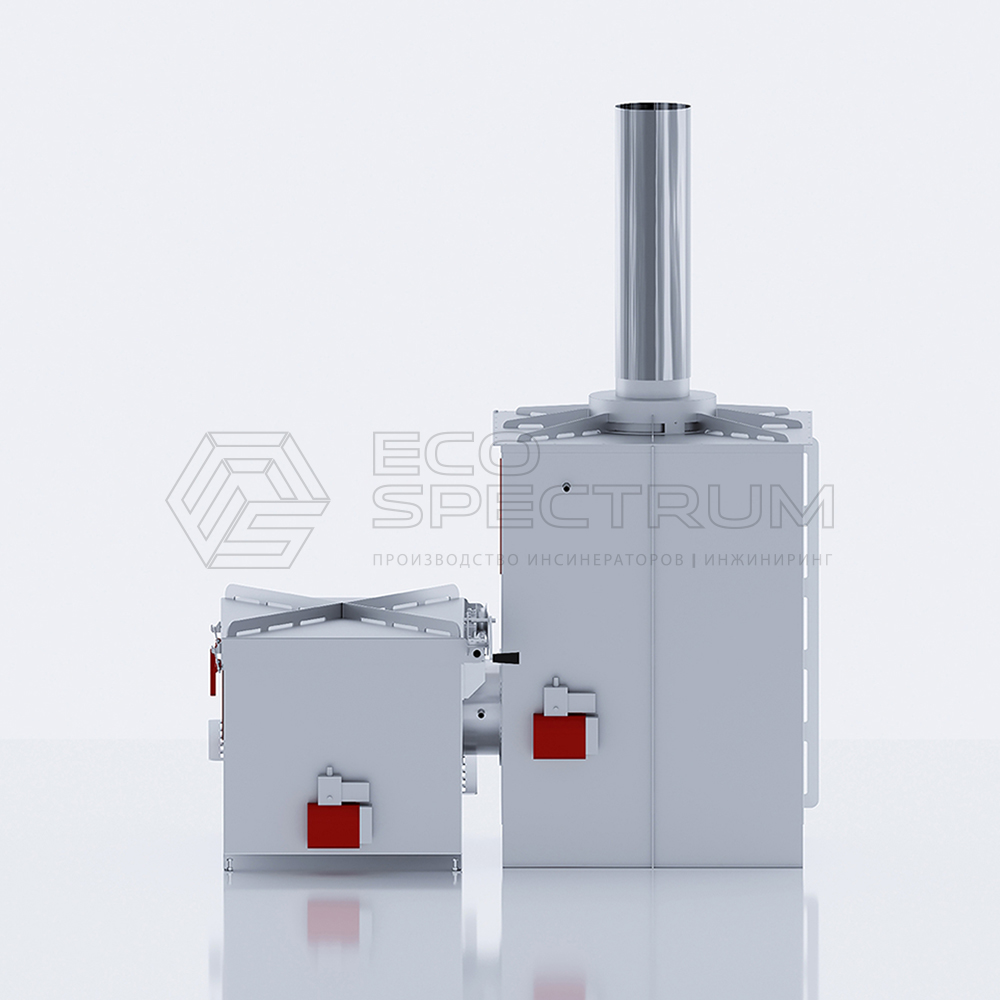
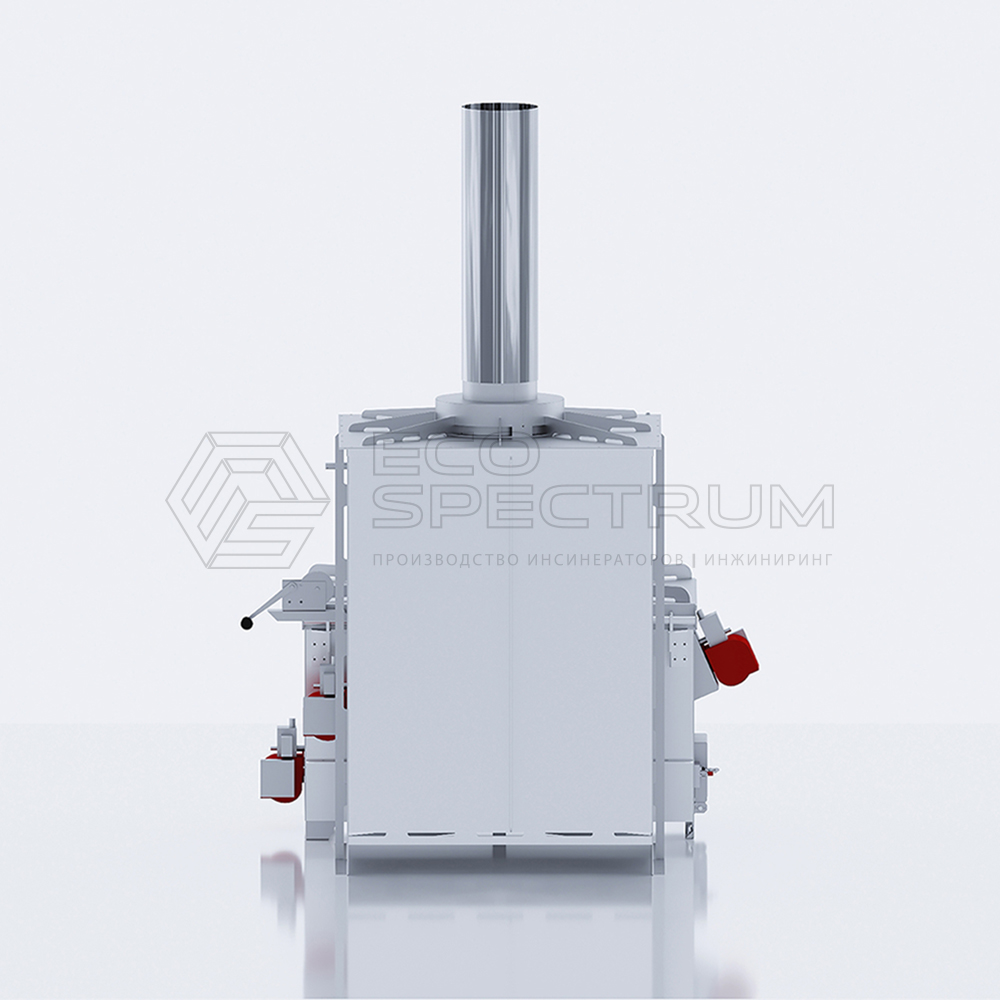
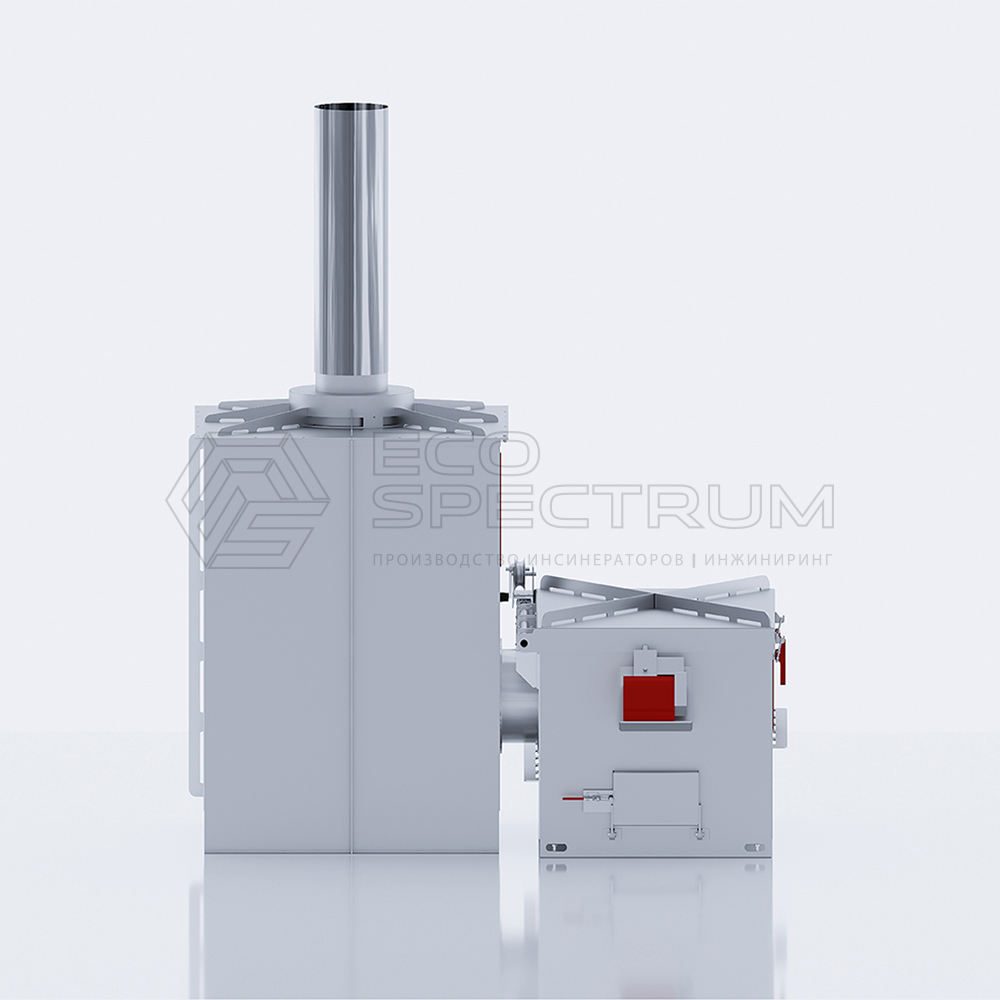
 Mobile Installation
 Heat recuperator
 Waste loading
 Gas cleaning system


